
At Verizon
A shared, AI-powered project hub that replaced status meetings
A project site that kept three busy people in sync without status reports.
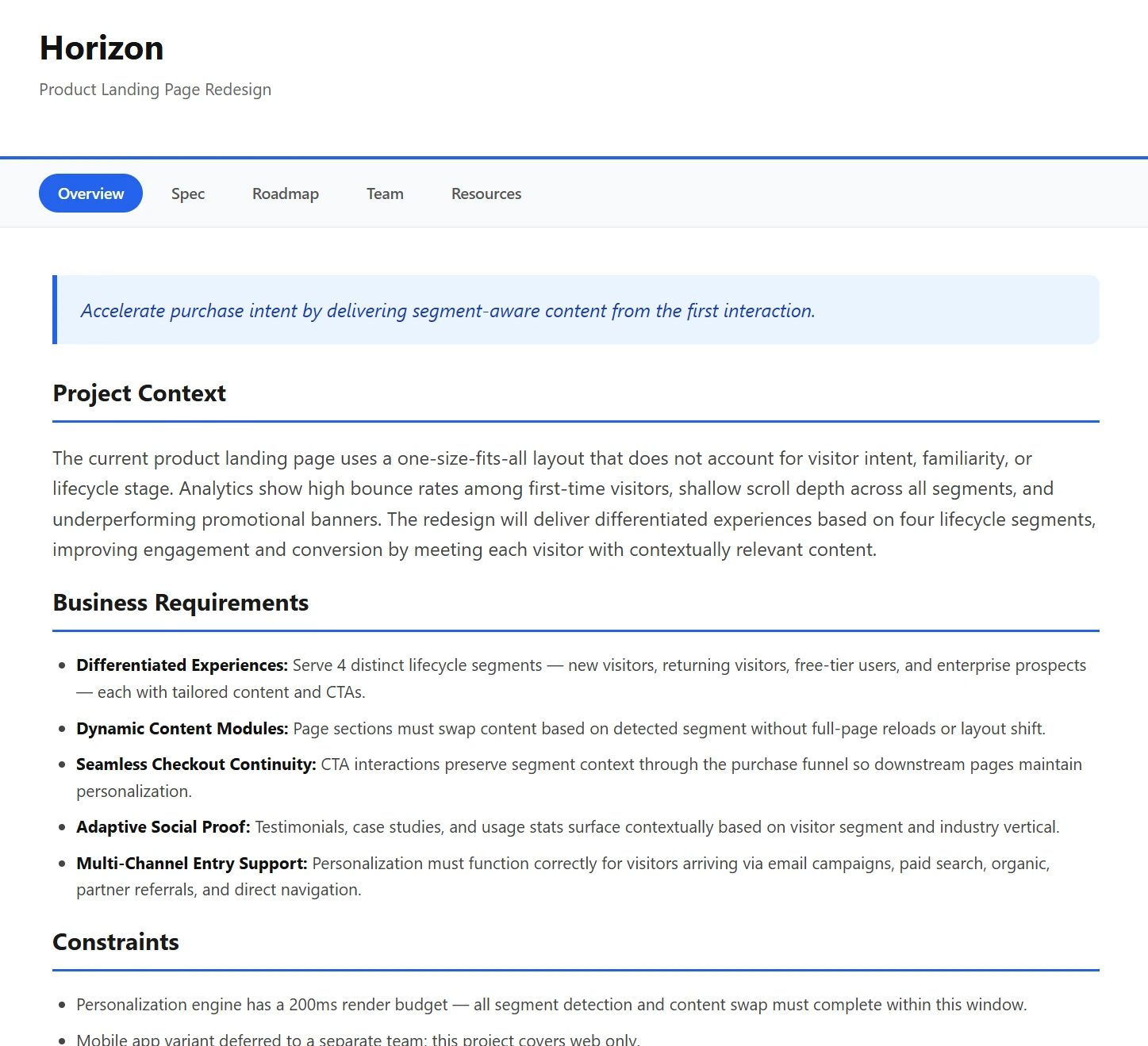
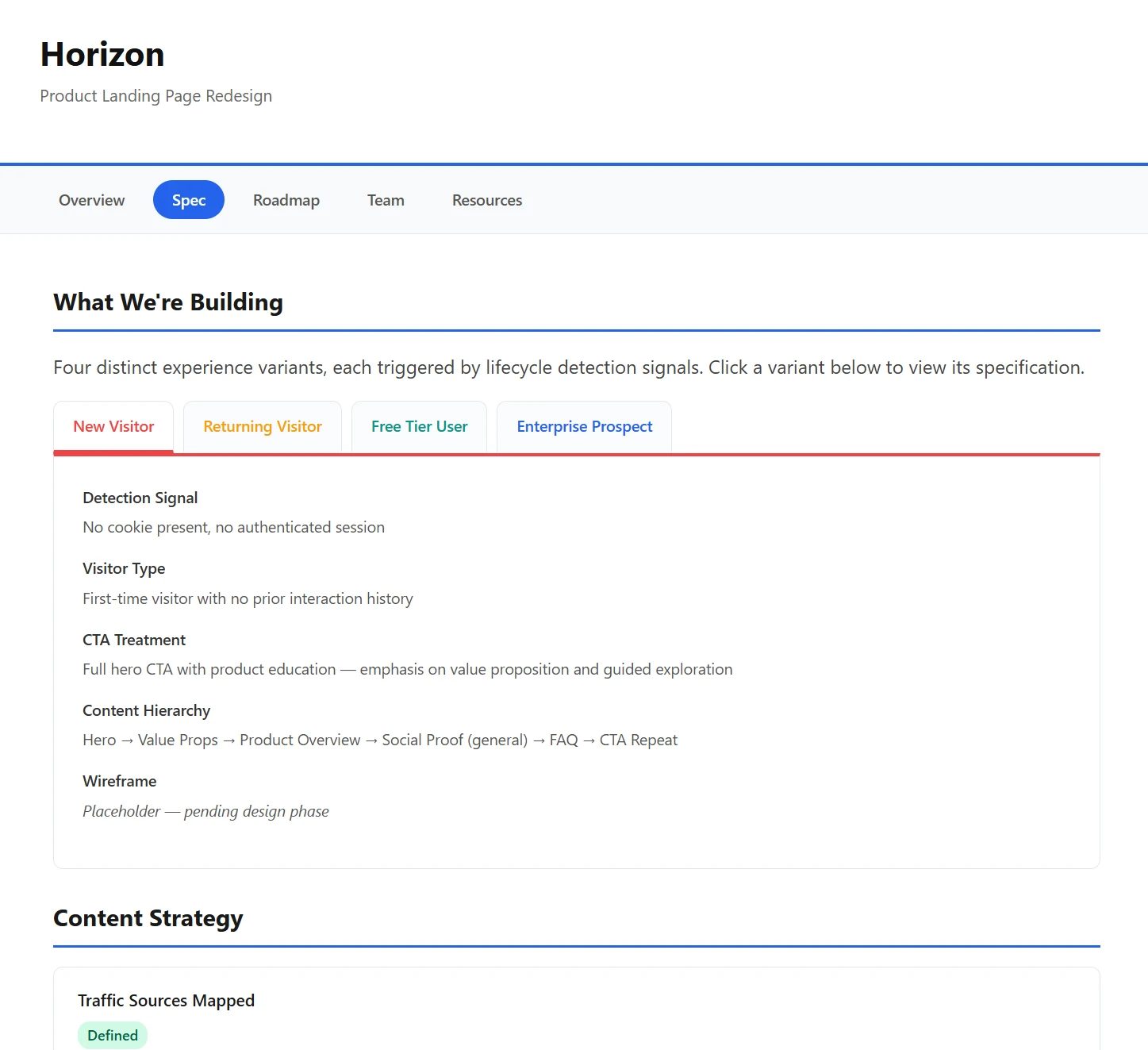
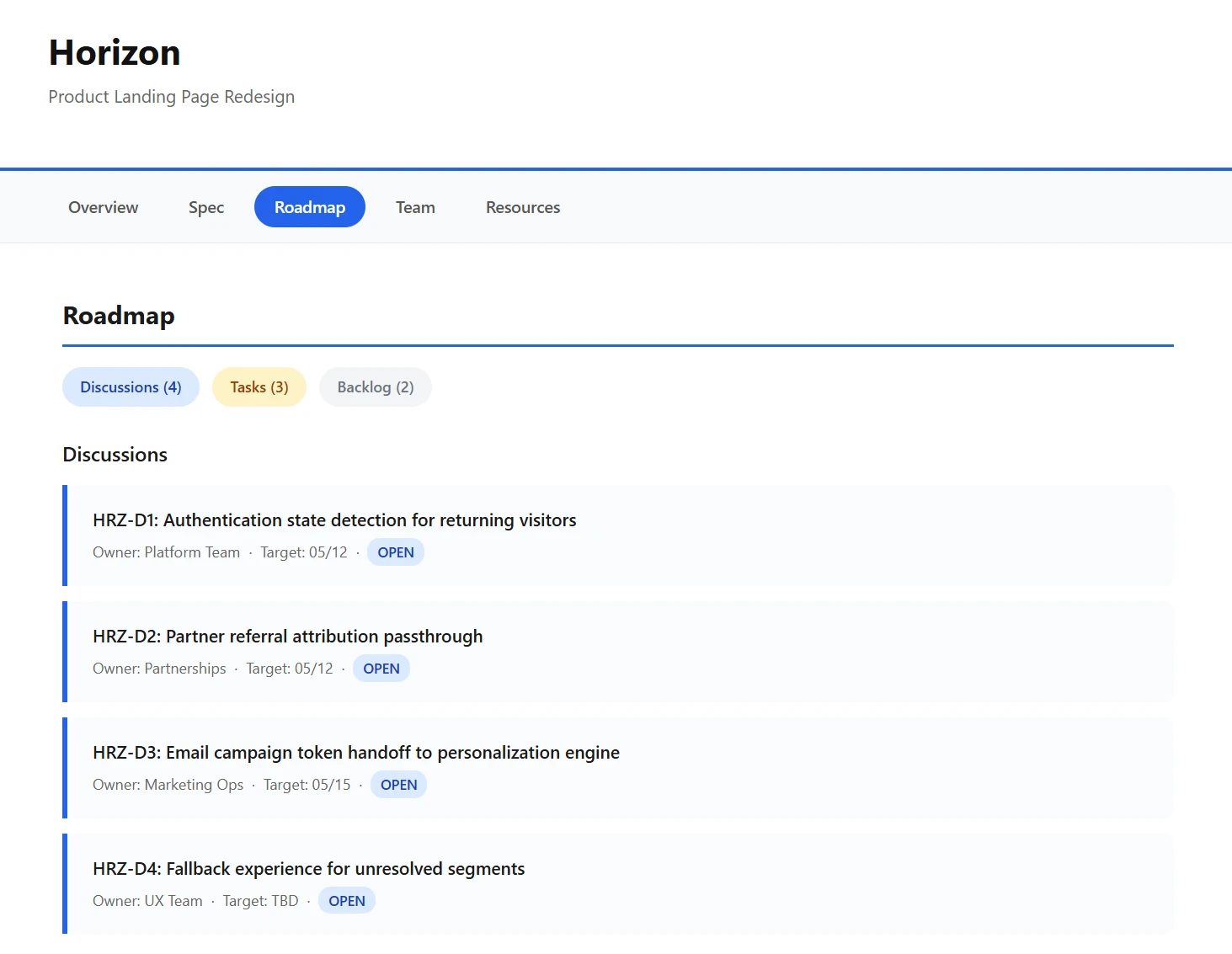
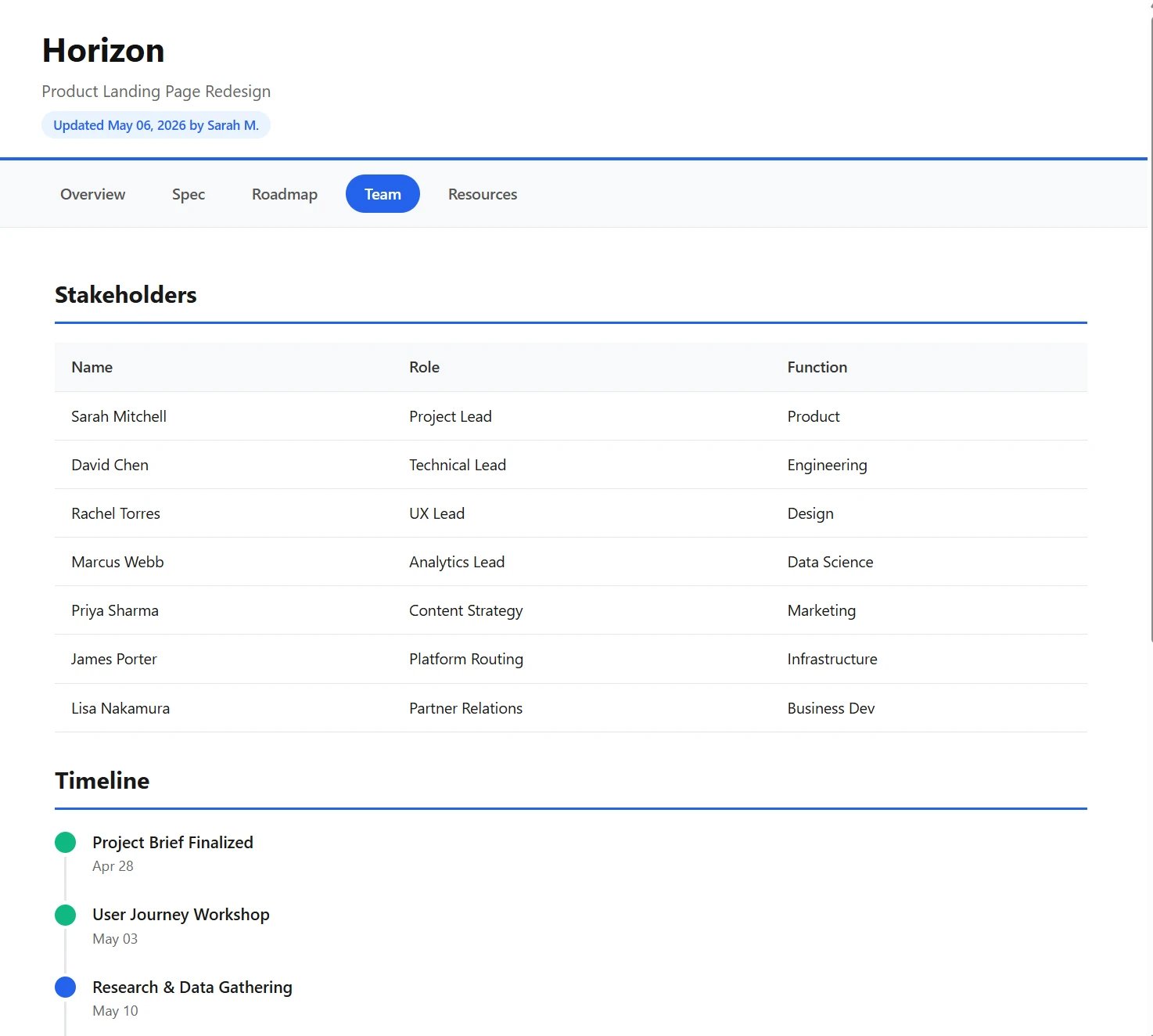
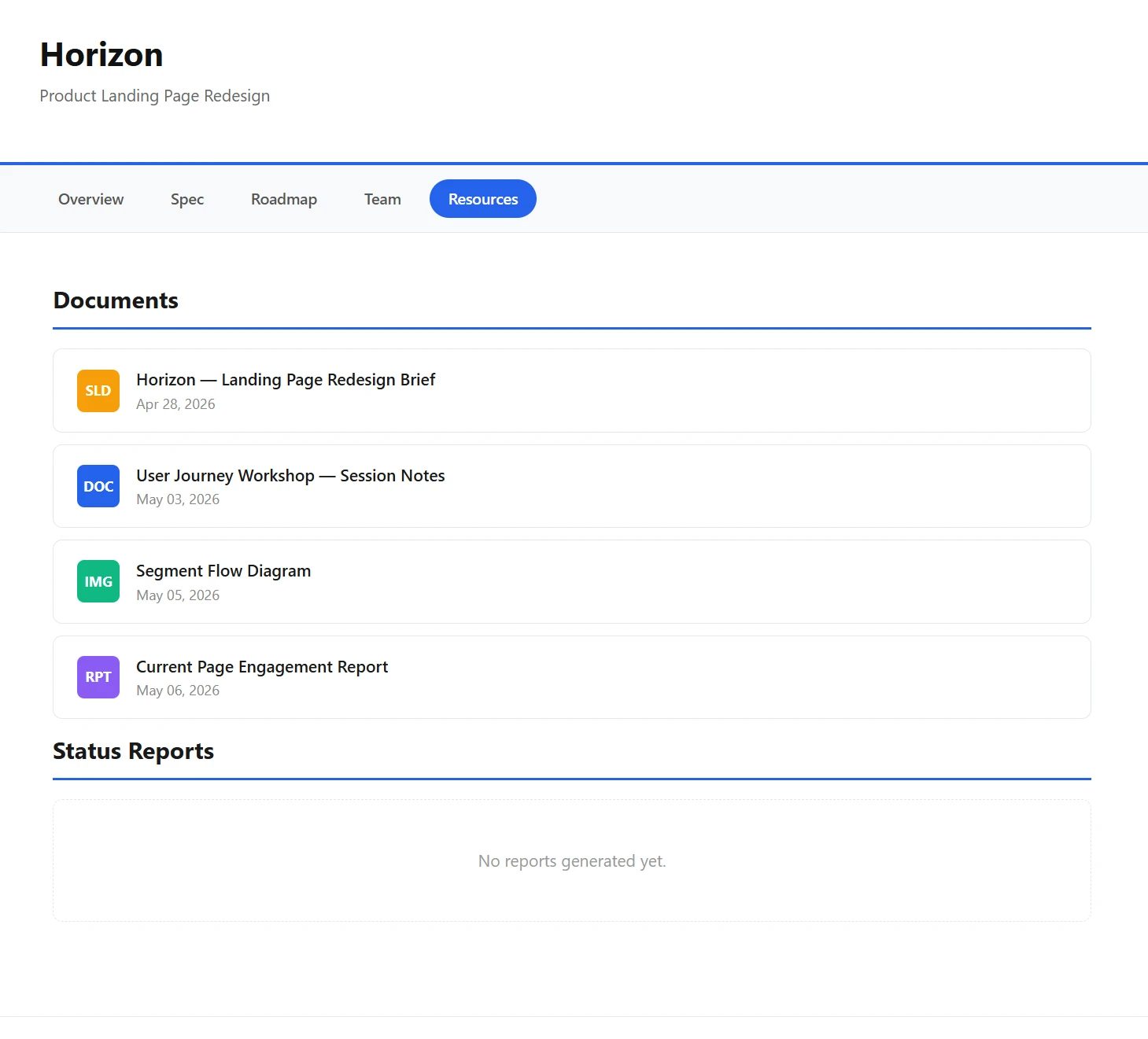
The app screens below are a mock-up of the starting template we built. The actual hub held Verizon information I can't share.
The problem
A senior merchandiser on my team had been running a project for weeks. His work was always good, but his manager, the merchandising director, and I still needed to look it over and make sure it matched what we were hearing at our level. All three of us were too busy to find a time to meet. Nothing was on fire, but the weeks kept going by and we never properly caught up.
A written status report wasn't the answer. It would cost him time, and there was a good chance we wouldn't read it. Even if we did, we'd both have questions. Two busy people sending him separate feedback becomes a game of telephone, with him stuck managing revisions. We didn't want to put that on him.
What I built
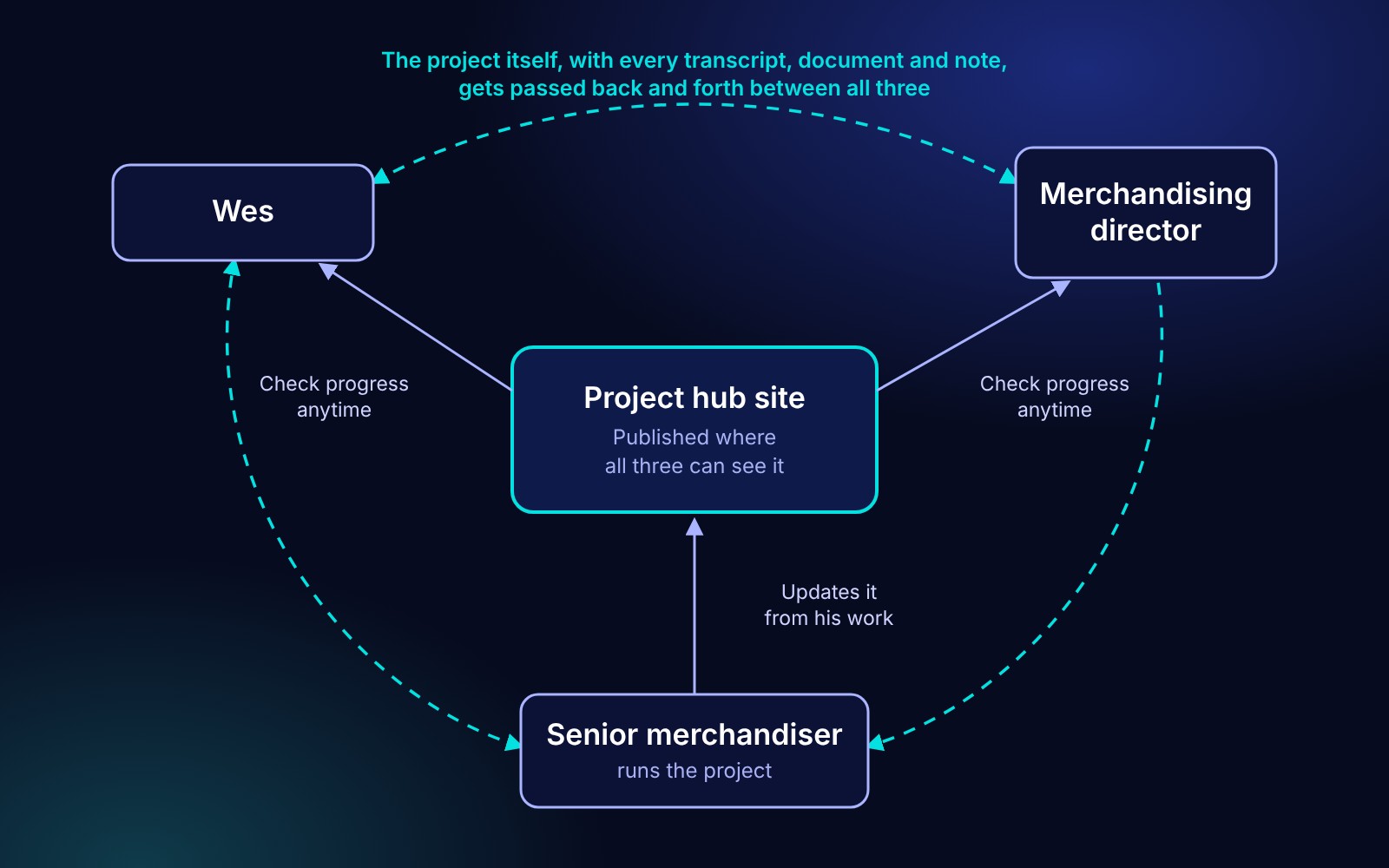
The director and I worked out a skeleton for a project hub: what we wanted to track, know and see, so we could tell what the project was and how it was going. I built that template with my AI agent. I also set up a place on our group's web server to publish it, where all three of us could see it as it changed.
Then I handed the project to him through our team's sharing system. From there he added his work to it: meeting transcripts, requirements, notes, presentations and input from other people. He also used it with his own agent to produce his deliverables and updates, and saved everything back into the project. As new material came in, he told his agent to update the hub site from it.
What had to be handled carefully
- Keep his extra work close to zero. He didn't write status reports. He did his normal work in the project, and the site was updated from that.
- Let the status come from the work. He didn't declare where things stood. It was observed and written up from his actual work and conversations.
- Keep the raw material too. The site showed the short version. The project kept everything behind it, so we could go back to the source.
- Skip the game of telephone. The director and I each pulled down the project and asked our own questions, instead of both sending him feedback.
The value
The site stayed current on its own. The director and I could check progress and look at the materials whenever we had a minute.
For our questions, either of us could pull down his working copy of the project, like a ball passed back to us. Because it had all the raw material, we could ask it why a decision was made, who was in that discussion, and whether a concern ever came up. We understood far more without pulling him into a meeting. The questions we still had were fewer and sharper. We could also spot things he needed from us and send them before he asked.
When the three of us did talk, the conversation was short and easy, and we stayed in sync in between.